Asset Sharing Engine
Create a foundation for matching asset demand and availability across teams, partners and projects.
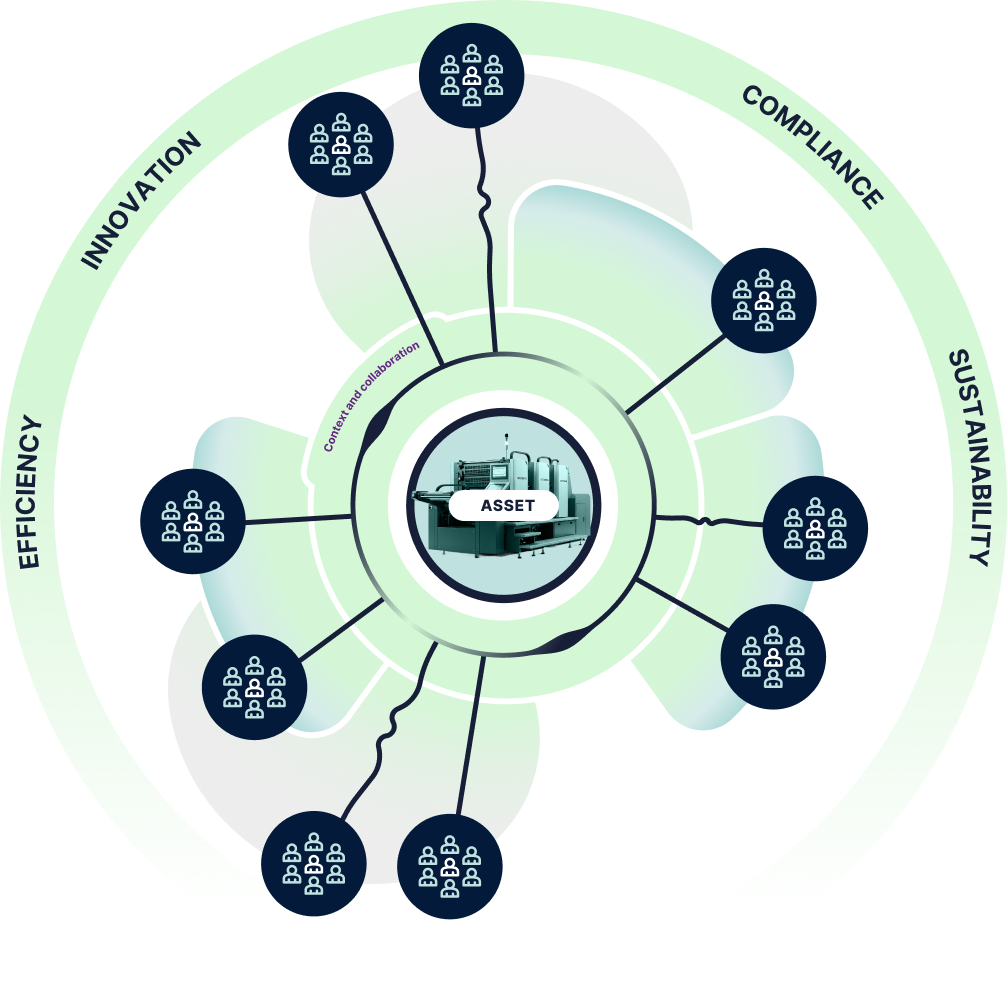
The Asset Sharing Engine connects both the supply of available assets and the demand for asset use in one shared context. It helps organizations make assets discoverable, requestable and easier to allocate across projects, teams or partner networks.
By bringing together availability, locations, conditions, stakeholders, requests and approvals, organizations can coordinate how assets are shared and used in practice. Built on Purple Unity Foundation capabilities such as search, authorization, documents and integrations, it creates the trusted sharing context needed to increase utilization, reduce unnecessary purchases and support circular value creation.



Asset and Availability Management
Optimizing Resource Availability through Effective Asset Management
Owners or representatives can easily manage assets and share information about their planning and availability. This includes where, when, and under what conditions an asset is available, ensuring optimal utilization of resources.


Work and Request Management
Enhancing Work and Request Management with Advanced Functional Access
Project owners and interested parties have access to advanced functions for managing requests. Whether it's submitting a new request or searching for suitable resources, the engine offers flexibility. Brokers or representatives can also support these processes.

Search Functions
Streamlined Asset Matching with Powerful Search Functions
The search capabilities within the Asset Sharing Engine are optimized to quickly find the right match between available assets and requests. Users can easily filter by criteria such as location, availability, and specific asset characteristics.

Business benefits
Create more value from underused assets
The Asset Sharing Engine helps organizations make assets available to the right teams, projects, customers or partners. By combining asset information, availability, conditions, requests and workflows, organizations can improve utilization and reduce unnecessary purchases or idle capacity.
Authorization Model
A Robust Authorization Model for Secure Access to Sensitive data
Security and information protection are key. The authorization model ensures that only authorized users have access to sensitive details, making the engine suitable for handling confidential projects and assets.

Communication and Information Access
Facilitating Direct Communication for Efficient Information Access
The engine facilitates direct communication between asset owners and interested parties. Through interactive features, requests for information access can be made, allowing users to quickly obtain the necessary details without disrupting the process.

Build new asset-driven business models
From shared asset context to custom marketplaces, portals and workflows
Purple Unity helps organizations create new digital business models around assets, availability and collaboration. With API-first integrations, event support, custom capabilities and tailored front-ends, you can build solutions that fit your market.
Nauticworx shows how Purple Unity can power a marketplace for vessel availability, charter requests and stakeholder collaboration — all connected through one asset collaboration layer.

AI agents that work with real asset context
Purple Unity makes asset context available to AI agents through MCP. Agents can safely use connected asset data, documents, history, relationships and events to support teams in their daily work — from finding information to preparing handovers and suggesting next steps.
Purple Unity products help asset-driven organizations connect assets, data, people and processes across the full asset lifecycle.


Asset Data Manager

Company & Contacts Manager

Contract Manager

Asset Sharing Engine

Service & Support Engine


Auction Engine
The foundation behind every capability
Purple Unity is built on a shared foundation that connects assets, information, people and systems across the asset lifecycle. This foundation helps organizations structure asset information, collaborate in context, control access, integrate with existing systems and create digital experiences for every stakeholder involved.


Flexible information modeling
Structure asset information around your business, processes and relationships. Model assets, attributes, lifecycle stages, ownership, availability, documents and interactions in a way that fits your organization.
Document & media management
Keep documents, media and files connected to the right asset, process or collaboration context. Manage manuals, certificates, images, contracts, reports and other relevant information where it is actually used.
Search
Find asset information, documents, relationships, activities and historical context across Purple Unity. Help users quickly understand what exists, where it belongs and what has happened before.
Authorization
Give people access to the right information at the right moment. Control visibility and permissions based on roles, organizations, asset context, lifecycle stage or collaboration scenario
API & events
Connect Purple Unity with the systems that already support your business. Use APIs and events to exchange asset data, trigger workflows, synchronize information and keep digital processes aligned
AI enablement & MCP
Make asset information and business context available to AI agents in a controlled and reliable way. Enable AI-supported search, assistance, automation and decision support without losing governance over your data.
Custom front-ends
Create portals, apps and digital interfaces for customers, partners, employees or agents. Build experiences that match the needs of each user group while using the same shared asset context underneath.
Journaling and Analytics
Capture changes, events, actions and activity across the asset lifecycle. Turn this history into dashboards, reports and insights that improve visibility, collaboration and decision-making.Start with the workshop playbook
Use the playbook to prepare your exploration: map your asset lifecycle, stakeholders, systems, collaboration challenges and opportunities for applied AI.