
Asset Data Manager
Create a flexible foundation for every asset, relationship and lifecycle stage.
The Asset Data Manager turns complex asset information into structured, reusable asset context. It brings together profiles, specifications, lifecycle data, relationships and hierarchies, and makes them available across portals, APIs and integrations.
With configurable data structures, organizations can model assets the way they actually work — from standalone assets to fleets, machines, installations and sub-assets. Built on Purple Unity Foundation capabilities such as media, documents, search and authorization, it creates the trusted asset context needed for operations, collaboration and digital services.



Managing Asset Data via API and Portal
Manage asset information in one connected asset context
Asset data is often spread across ERP, PLM, PIM, IoT platforms, service systems, spreadsheets and asset management solutions. The Asset Data Manager brings this information together in one structured asset context, where teams can manage, enrich and share reliable asset information.
Asset profiles can be managed through an intuitive admin portal or integrated directly through APIs and events. This makes the solution suitable for internal teams, external portals, customer-facing applications and system-to-system integration.


Model every asset type around your business reality
Flexible asset data structures
Every asset type is different. A vessel, machine, production line, vehicle, tool, component or installation all require different information models. With flexible asset data structures, you can define which fields, sections, classifications, relationships and recurring data groups belong to each asset type.
This makes it possible to create asset profiles that fit your business context instead of forcing every asset into one generic structure.


Asset hierarchy and composition
Manage complex asset structures, components and sub-assets
Many assets are not standalone objects. They are part of a larger structure, installation, fleet, production line or system. The Asset Data Manager supports hierarchical asset models, allowing organizations to define parent-child relationships, components, sub-assets and assemblies.
This makes it possible to understand how assets are built, where components are used, which assets belong together and how changes in one part of the structure impact the wider asset context.
For example, the Asset Data Manager can be used to model a ship with onboard systems, equipment and components, a production line with machines, modules and spare parts, or a fleet with vehicles, trailers and installed equipment. It can also support machines with configurable parts and serviceable components, as well as building installations with systems, units and inspection objects.

Asset Relations
Connect assets to people, companies, contracts, services and other assets
An asset does not live on an island. Assets are connected to owners, users, suppliers, dealers, operators, service teams, contracts, documentation, cases and other assets. By defining these relationships, organizations create a richer understanding of the asset context.
This enables better service, clearer responsibilities, more relevant customer experiences and stronger collaboration across teams and partners.

Integration with asset data and management systems
Connect asset data across ERP, PLM, PIM, IoT and asset management platforms
The Asset Data Manager is designed to work alongside existing systems. It can connect with asset management systems, ERP, PLM, PIM, service management, IoT, document management and customer-facing portals.
Instead of replacing every source system, Purple Unity creates a connected asset layer where data can be combined, enriched and made usable for collaboration, digital experiences and lifecycle processes.

Business benefits
Create more value from complex asset data
Asset data is often spread across systems, teams and lifecycle stages. The Asset Data Manager creates a structured asset data layer that makes complex asset information easier to manage, reuse and expose through portals, integrations and business processes.
Publishing asset data
Make asset data available for portals, applications and business processes
Asset data can be exposed to different digital channels and business processes, such as customer portals, partner portals, service applications, marketplaces, auction platforms, sharing platforms or internal tools.
Publication targets define which asset data becomes available, where it is shown and under which authorization rules. This allows organizations to reuse structured asset data across multiple experiences without duplicating or manually maintaining the same information in different places.

Start with the workshop playbook
Use the playbook to prepare your exploration: map your asset lifecycle, stakeholders, systems, collaboration challenges and opportunities for applied AI.

The foundation behind every capability
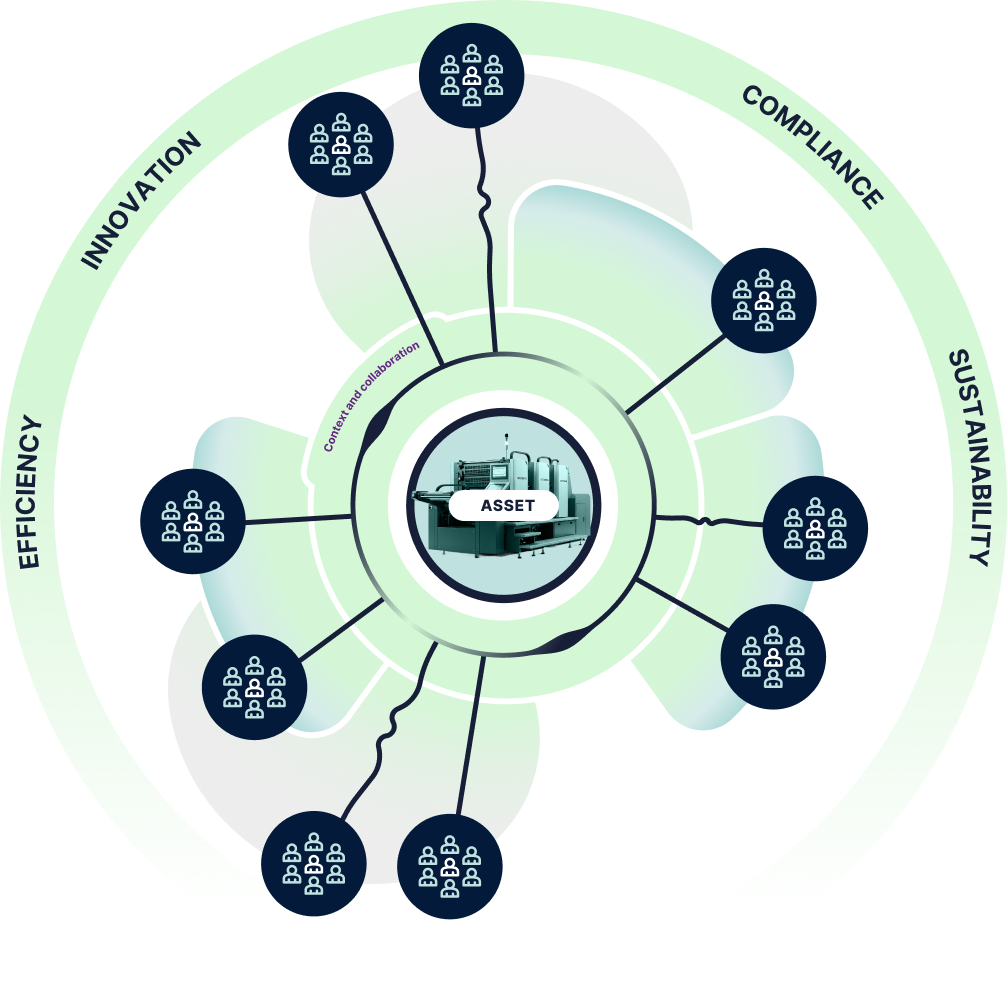
Purple Unity is built on a shared foundation that connects assets, information, people and systems across the asset lifecycle. This foundation helps organizations structure asset information, collaborate in context, control access, integrate with existing systems and create digital experiences for every stakeholder involved.


Flexible information modeling
Structure asset information around your business, processes and relationships. Model assets, attributes, lifecycle stages, ownership, availability, documents and interactions in a way that fits your organization.
Document & media management
Keep documents, media and files connected to the right asset, process or collaboration context. Manage manuals, certificates, images, contracts, reports and other relevant information where it is actually used.
Search
Find asset information, documents, relationships, activities and historical context across Purple Unity. Help users quickly understand what exists, where it belongs and what has happened before.
Authorization
Give people access to the right information at the right moment. Control visibility and permissions based on roles, organizations, asset context, lifecycle stage or collaboration scenario
API & events
Connect Purple Unity with the systems that already support your business. Use APIs and events to exchange asset data, trigger workflows, synchronize information and keep digital processes aligned
AI enablement & MCP
Make asset information and business context available to AI agents in a controlled and reliable way. Enable AI-supported search, assistance, automation and decision support without losing governance over your data.
Custom front-ends
Create portals, apps and digital interfaces for customers, partners, employees or agents. Build experiences that match the needs of each user group while using the same shared asset context underneath.
Journaling and Analytics
Capture changes, events, actions and activity across the asset lifecycle. Turn this history into dashboards, reports and insights that improve visibility, collaboration and decision-making.Purple Unity products help asset-driven organizations connect assets, data, people and processes across the full asset lifecycle.


